

How URL Shorteners and Shortlinks Make Money (and How to Use Them Safely)
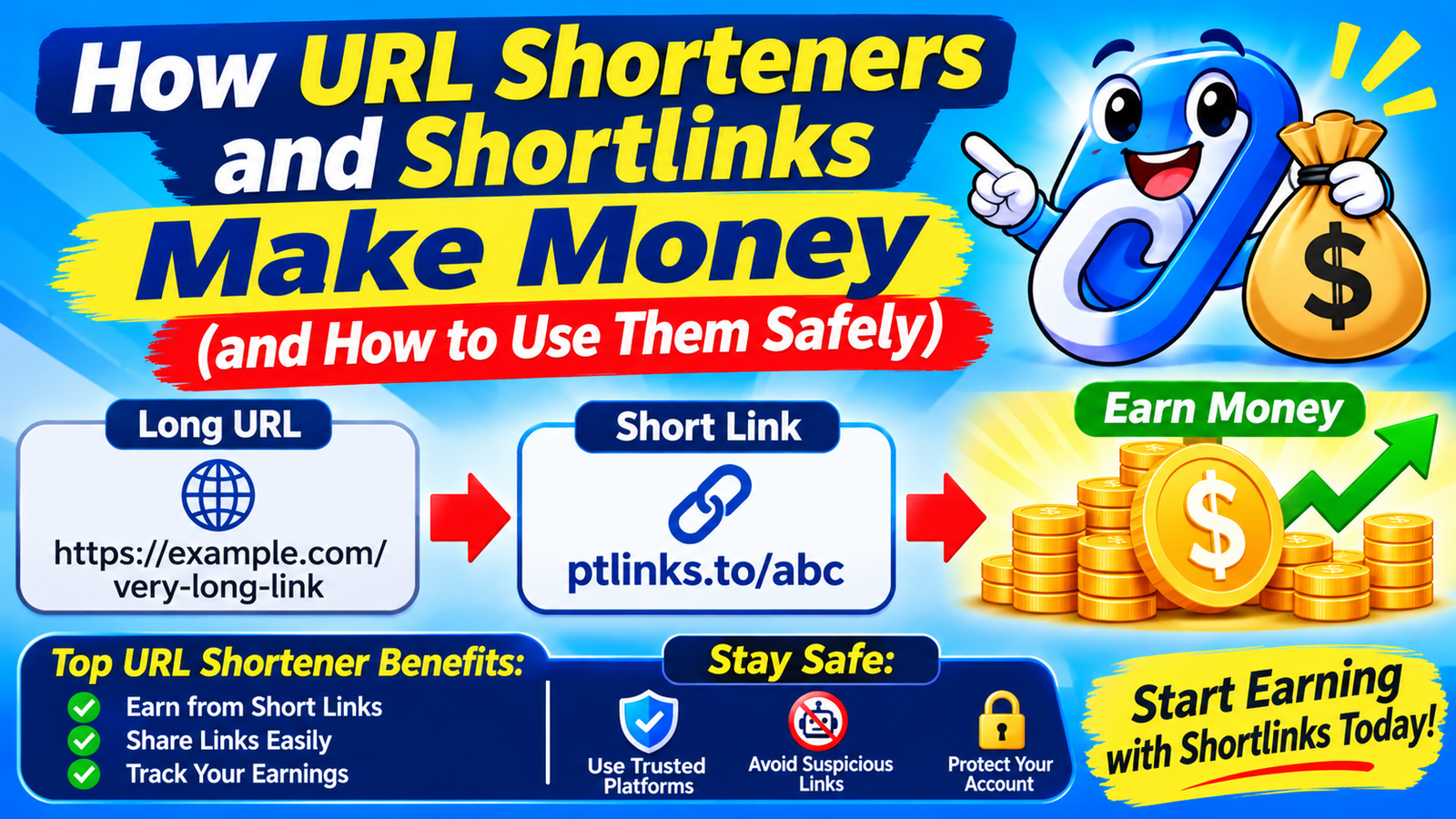
A URL shortener turns a long web address into a short one that is easier to share. You see them on social media, in chat messages and in printed material. Some shortening services also pay the person who created the link when visitors open it. These are called monetized shortlinks, and they are a common feature on reward websites.
How a basic URL shortener works
When you submit a long address, the service stores it in a database and gives you a short code. When someone opens the short link, the service looks up the code and sends the visitor to the original destination. This lookup is called a redirect.
How monetized shortlinks earn money
A monetized shortlink adds one or more steps between the short link and the destination. The visitor may see a page with advertisements, a countdown timer or a button that must be clicked to continue. Advertisers pay the shortening service for those impressions or actions, and the service shares a portion of the revenue with the person who created the link or with the platform that sends the traffic.
Why do reward sites use them?
For a reward platform, a shortlink is one way to earn advertising revenue and pass part of it to users. The visitor spends a minute going through the steps and receives a small reward. The amounts are small because each visit is worth only a fraction of a cent to advertisers.
What can go wrong?
- Aggressive ads: some pages open pop-ups or new tabs that you did not ask for.
- Misleading buttons: fake download or play buttons designed to confuse you.
- Malicious redirects: a poorly controlled ad can send visitors to harmful sites.
- Privacy: advertising networks may track visitors across sites.
Staying safe
- Never download files that a shortlink page offers, unless you clearly expected them.
- Never enter passwords or wallet phrases on a page you reached through a shortlink.
- Close unexpected tabs instead of interacting with them.
- Keep your browser and operating system updated, since updates fix known security holes.
- Use a reputable security tool and be careful with browser extensions that ask for broad permissions.
- Check where a short link leads with a link expander if the source is unknown.
For people who publish short links
If you share monetized links, be open about it. Tricking people into clicking, using automated clicks or paying for fake traffic is against the rules of almost every shortening service and ad network, and accounts that do this are usually closed with the earnings withheld.
Is it worth your time?
Compare the minutes you spend with the reward you receive. For most people shortlinks are a very small side income. Use them only if you are comfortable with the steps involved, and skip any site that asks for something that feels unsafe.
Key takeaway
Monetized shortlinks turn a short visit into advertising revenue that is shared with the person who sent the traffic. They are legitimate when used honestly, but the pages can be cluttered with ads, so keep your guard up and your browser updated.
We publish beginner-friendly guides about cryptocurrency, wallet security and safe online earning. Articles are for education only and are not financial advice. Spotted a mistake? Let us know.